


Chair of the Philosophy Department

Antonio Donato
Acting Chair of Philosophy Department
Professor
D.Phil in Philosophy, Oxford University
Office: Powdermaker Hall 350A
Phone: 718-997-5270
antonio.donato@qc.cuny.edu
Area of expertise: Medieval and Renaissance Philosophy.
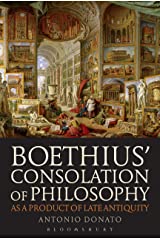
Antonio Donato is Professor of Medieval and Renaissance Philosophy at Queens College, where he has been working since 2007. He has conducted his doctoral studies at the University of Padova (2005) and Oxford University (2007). His research focuses on two main areas: late antique philosophy and Italian Renaissance utopianism. He is the author of Boethius’ Consolation of Philosophy as a Product of Late Antiquity (2013); Italian Renaissance Utopias: Doni, Patrizi, and Zuccolo (2019); Boezio: un pensatore tardoantico e il suo mondo (2021); and Ludovico Agostini’s Imaginary Republic. Utopia in the Italian Renaissance (2023).
Books
- Ludovico Agostini’s “Imaginary Republic.” Utopia in the Italian Renaissance, Cham: Palgrave/MacMillan, 2023)
- Boezio. Un pensatore tardoantico e il suo mondo, (Roma: Carocci Editore, 2021)
- Italian Renaissance Utopias: Doni, Patrizi, and Zuccolo, (Cham: Palgrave/MacMillan, 2019)
- Boethius’ Consolation of Philosophy as a Product of Late Antiquity (London: Bloomsbury Academic, 2013)
 |
 |
 |
 |
Textbooks
- Introduction to Philosophy(Great River Learning, 2019)
Articles
- Ludovico Agostini e l’utopia. Per un’iniziale rilettura della Repubblica Immaginaria, «Studia Oliveriana» 10 (2024): 31-46
- Aristotle and Utopia, «International Journal of the Classical Tradition» 31 (2024): 235- 263
- Exploring the Mystery of the Trinity. Boethius’ On Trinity: Innovation and Continuity, «The Saint Anselm Journal»18 (2023): 13-50
- Forgetfulness and Misology in Boethius’ ‘Consolation of Philosophy’, «British Journal of the History of Philosophy» 21 (2013): 463-485 【Winner of Rogers Prize for the best article published in the «British Journal of the History of Philosophy» in 2013】
- Self-examination and Consolation in Boethius’ ‘Consolation of Philosophy’, «Classical World» 106 (2013): 397-430
- Boethius’ Consolation of Philosophy and the Greco-Roman Consolatory Tradition, «Traditio» 67 (2012): 1-42 【Reprinted in Trudeau L. J. (ed.), Classical and Medieval Literature Criticism, Gale Literature Collections, Vol. 181, (New York: Layman Poupard Publishing, 2017), 115-139】
- Aquinas’ Theory of Happiness and its Greek, Byzantine, Latin and Arabic Sources, «Al-Masaq» 18 (2006): 161-189
- The Role of Focus in Aquinas’ Doctrine of Analogy, «Proceedings of American Catholic Philosophical Association» 77 (2004): 285-297
- Il ruolo dell’analogia di attribuzione e di proporzionalità nella dottrina dell’essere di Tommaso, «Medioevo» 28 (2003): 120-145
- Le formulazioni di Aristotele e Tommaso d’Aquino del principio di non contraddizione, «Sensus Communis» 4 (2003): 60-70
Chapters in Books
- “Boethius on Eternity.” In Plotinus’ On Eternity and Time – Works of Philosophy and Their Reception, ed. A. Michalewski, (Berlin: De Gruyter, forthcoming)
- “Self-investigation, Self-knowledge, and Inner-Conflict in Boethius’ Consolation of Philosophy.” In Boethius’ Consolation of Philosophy. A Critical Guide, ed. M.O. Wiitala, (Cambridge: Cambridge University Press, 2024), 113-164
- Intellectual Ascent and Experience in Dante’s “Divine Comedy” in Doukhan A. Malagon A. (eds), The Redemption of Feeling, (Lanham: Lexington Books, 2019), 39-52
- (with Jaffe-Berg E.) Philosophy and Social Theory in Enders J., Coletti T., Symes C., and Sebastian J. (eds), A Cultural History of Tragedy: Middle Ages, (London: Bloomsbury Academic, 2019), 65-80
- Forgetfulness and Human Behavior in Boethius’ ‘Consolation of Philosophy’ in De Anna G. (ed), Willing the Good: Empirical Challenges to the Explanation of Human Behavior, (Cambridge: Cambridge Scholars Publishing, 2012), 23-39
- The End of Human Nature in Aquinas, in Virtue’s End: God in the Moral Philosophy of Aristotle and Aquinas, Di Blasi F., Hochschild J. and Langan J. (eds.), (South Bend: St. Augustine’s Press, 2008), 27-43
Book Reviews
- Review of Juliusz Domański, Philosophy, Theory or Way of Life? Controversies in Antiquity, the Middle Ages and the Renaissance, (Leiden, The Netherlands: Brill, 2024), «Foucault Studies» 38 (2025) (forthcoming)
- Review of Andrew Hicks, Composing the World: Harmony in the Medieval Platonic Cosmos, (New York: Oxford University Press, 2017), «Bryn Mawr Classical Review», 2017.07.41
http://bmcr.brynmawr.edu/2017/2017-07-41.html - Review of Futre Pinheiro M. P. and Montiglio S. (eds.), Philosophy and the Ancient Novel. Ancient Narrative Supplementum 20. (Groningen: Barkhuis: Groningen University Library, 2015), «Bryn Mawr Classical Review» 2016.05.37
http://bmcr.brynmawr.edu/2016/2016-05-37.html - Review of Blackwood S., The Consolation of Boethius as Poetic Liturgy, (Oxford: Oxford University Press, 2015), «The Medieval Journal» 6 (2016): 137-140
- Review of Bartsch S. and Wray D. (eds.), Seneca and the Self (Cambridge/New York: Cambridge University Press, 2009), «Foucault Studies» 11 (2011): 200-205
- Review of Sellars J., The Art of Living, (London/Duckworth: Bristol Classical Press, 2009), «Foucault Studies» 9 (2010): 216-220
- Review of Hadot P., The Present Alone is Our Happiness, (Stanford: Stanford University Press, 2009), « Foucault Studies» 7 (2009): 164-169
- Review of Frank J., A Democracy of Distinction: Aristotle and the Work of Politics, (Chicago/London: The University of Chicago Press), «Review of Politics» 68 (2006): 132-134