

Bachelor of Fine Art in Studio Arts
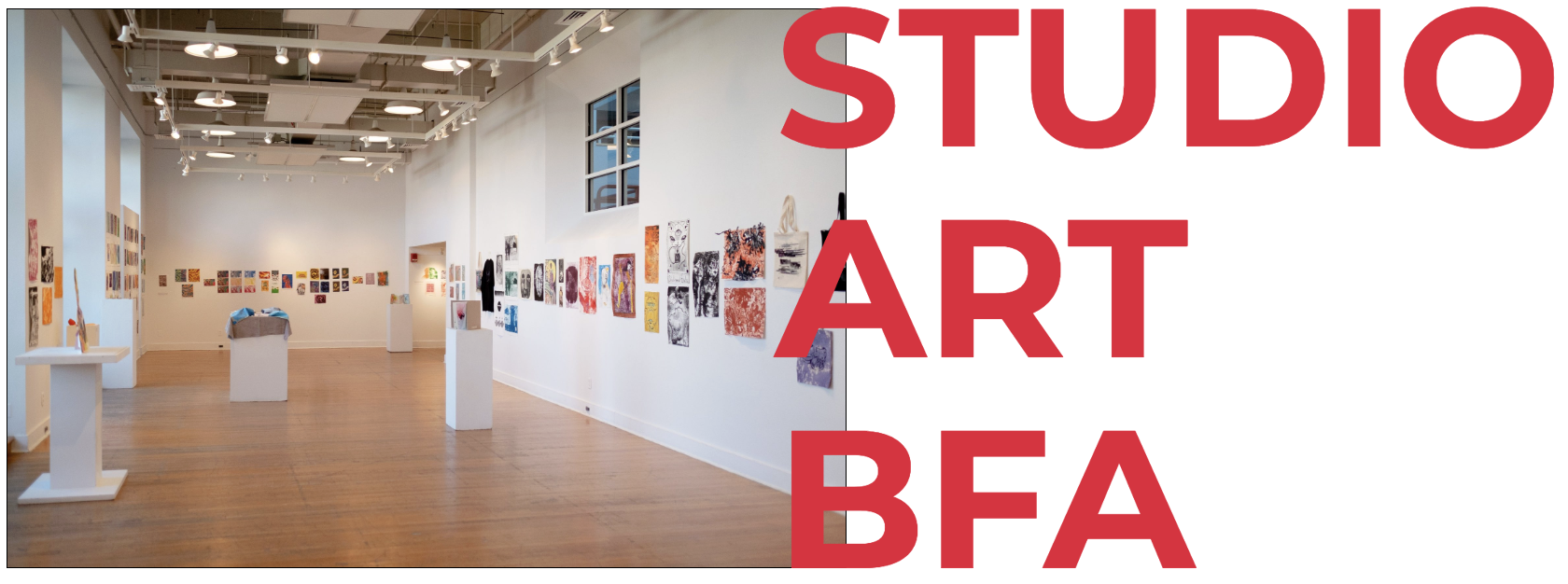
Students studying Studio Art at Queens College graduate with a Bachelor of Fine Arts (63 credits) which prepares students for creative and professional careers the work field such as fine-artists, illustrators, art teachers, fabricators, or other creative professions. Students will develop the foundations of art-making, color, and form in their introductory 100-level courses before moving on to hone their studio practices in 200 & 300-level classes. Two consecutive semesters of senior-thesis courses will offer as a capstone to their work in their final year of study, where students will present their work in the 4th Floor Student Gallery.
View the Studio Art BFA- Four Year Plan Here
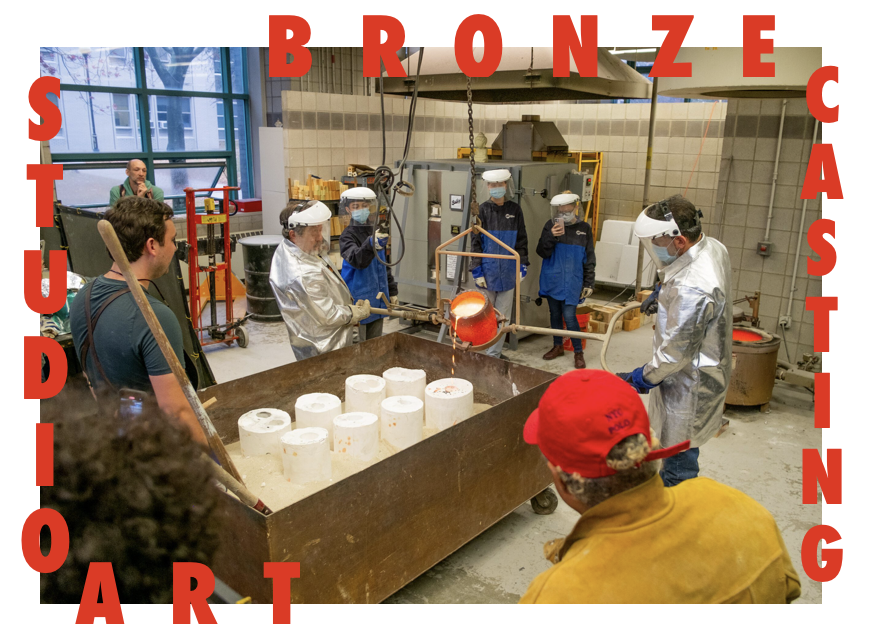
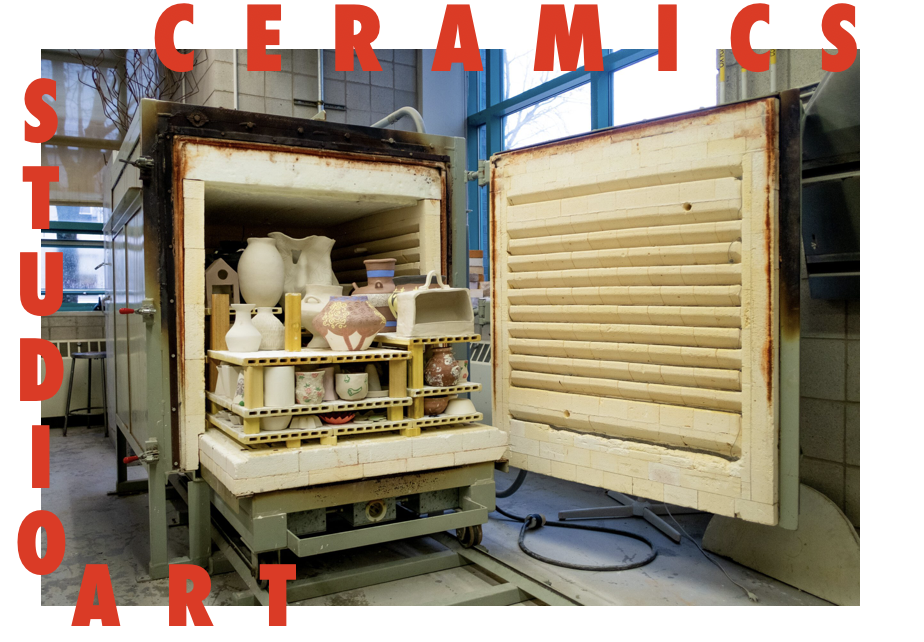
Fully equipped studios are available to students in their respective classes, including a large ceramics studio with electric and gas kilns, a wood-shop with tools for wood-carving & processing lumber, and metalshop with welders, metalscultping tools, and a bronze foundry, a print-making studio equipped for silk-screen, copper, linoleum, woodblock, and stone-lithography, as well as numerous studios for traditional oil and acylic painting and charcoal and graphite drawing.
View Studio Art BFA Requirements Here
Studio Art BFA candidates will spend many hours working throughout Klapper Hall, which features a student gallery where undergraduates feature work from classes and their two-final thesis courses, as well as visiting-artist exhibitions, Masters in Fine-Arts thesis shows, and much more. The Godwin-Ternbach Museum is also housed within Klapper Hall just down the hallway from the student gallery where their curators select work from their incredible selection of original fine-artwork as well as collaborate with other artists, scholars, and museums (checkout their page in the Related Links above).
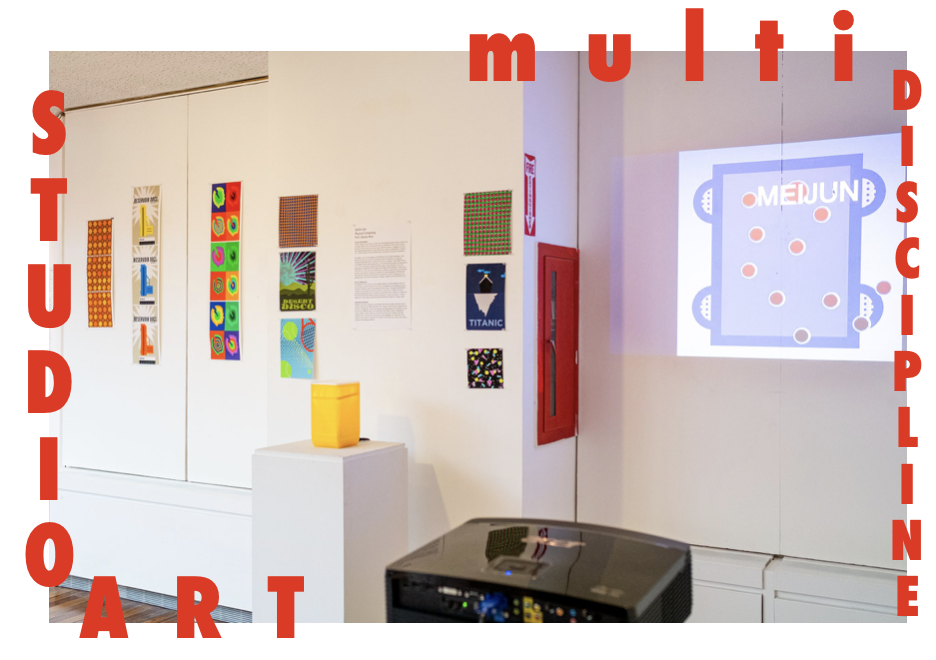

The mission of the Queens College Studio Art Department is to teach students how to make works of art—whether they are two dimensional, three dimensional, time-based forms, or transitory actions and activities—and to fully understand how those works may be experienced by viewers and participants. We encourage our students to think about art making as resistance to the habitual, the apathetic, and the uncritical; and to contribute to global culture by offering ways of seeing and thinking that challenge, complicate, and estrange conventional understandings of the world.