

Social Sciences Research Seminars
Time: 12:15–1:30 PM
Location: Powdermaker Hall, Room 333
The traditional pizza from the one and only Gino’s of Kissena will be served.
🔍 Upcoming Schedule: Spring 2026

Wednesday, May 13, 2026
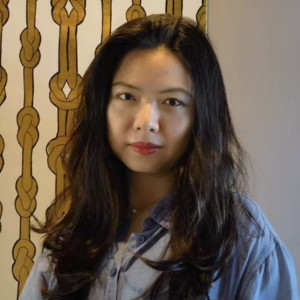
Speaker: Carol Giardina (QC History)
Topic: “Sexism as a Cold War Imperative: the Myth of the Already Liberated American Woman”
During the Cold War, US policymakers exalted domesticity, protection, and glamour for women as selling points for capitalism. Their showcasing of hi-tech housewifery and
women’s domestic luxury was intended to show that the United States was winning the living-standards race with the Soviet Union (and thus, that capitalism was superior to communism). In this presentation, Dr. Carol Giardina details how sexism was a Cold War imperative until the feminist movement of the 1960s rejected Cold War nationalism, linked US women’s inequality to revolutionary women’s liberation developments worldwide, and revealed that the free world’s premier capitalist democracy was
losing the hearts and minds of its own women. Some have argued that Cold War competition helped the advancement of civil rights; could the same be said for women’s rights?
Giardina argues that it was not the Cold War or its proponents who advanced freedom for women, but rather the women’s liberation movement, who rejected anti-communist propaganda and fought against Cold War nationalist standards for women.
Postponed to Fall 2026
Speaker: Yinxian Zhang (QC Sociology)
Topic: “Parallel Politics: Chinese Diaspora on YouTube and the 2024 U.S. Election”
Chinese American voters showed a significant shift in the 2024 U.S. presidential election, with support for Donald Trump rising from 27% in 2020 to 39% in 2024 — the largest increase among all Asian American subgroups. In this presentation, Dr. Yinxian Zhang will
discuss the information environment of the Chinese diaspora, which serves as a critical context of these trends. The presentation is based on Dr. Zhang’s ongoing research project that contrasts Chinese language political YouTube videos against their English-language counterparts during the 2024 election period. Drawing on a large-scale video dataset, the study employs both computational and qualitative content analysis to investigate this parallel information environment for Chinese-speaking audiences. We will discuss the peculiarities of the online Chinese diaspora, the unique narratives and frames in immigrant social media, and the insights into Chinese Americans’ political attitudes and identities amid tightened U.S.-China relations.

Monday, April 20, 2026
Speaker: Christine Jang-Trettien (QC Sociology)
Topic: “The Making of an Epidemic of Pain”
This paper examines the “economy of pain” that has emerged in
Eastern Kentucky. We do so by building on the concept of transfer economies, as well as recent literature on chronic pain. Export industries have traditionally been prioritized as the central engine of regional economies. However, places such as Eastern Kentucky have become increasingly reliant on transfer payments from federal and state governments to bring money into the region. Using 178 interviews with various stakeholders in Clay County and Perry County, Kentucky, this paper examines how reliance on transfer payments, intended to address the poor health of individual residents, comes to shape local institutions. We focus primarily on health insurance programs (Medicaid, Medicare), as well as disability assistance programs (SSI, SSDI) and how they transform healthcare facilities, law firms, businesses, as well as non-profit organizations. This study demonstrates how government assistance programs intended to target the needs of individual people can have a profound effect on places. In the case of Eastern Kentucky, this paper demonstrates how community organizations, much like the coal and timber industries that preceded them, often maintain their economic standing by extracting from the health and well-being of the community’s most vulnerable residents.
Monday, April 13, 2026
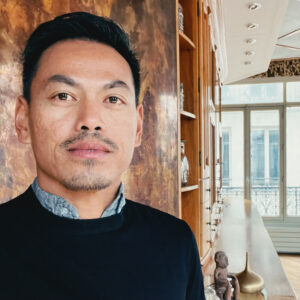
Speaker: Nerve Macaspac (QC School of Information)
Topic: “Peace Zones and Unarmed Civilian Protection”
Unarmed community self-protection refers to the practice of civilians using nonviolent means to protect themselves and other civilians within their own communities from violence, in contexts of little or no outside support. The need for protection of civilians from armed violence today is more pressing than ever, while the capacity and/or willingness of states and international institutions to provide protection to civilians seems to be further decreasing—heightening the importance of understanding and supporting community-led forms of protection. Drawing from the findings of Creating Safer Space, an international research network funded by the United Kingdom’s Arts and Humanities Research Council (AHRC) through the Global Challenges Research Fund (GCRF), this lecture focuses on the phenomenon of unarmed community self-protection as a practical critique of conventional concepts and practices of security, and as a lived alternative to direct and structural violences and as a different way of (alternative) collective security and world-making.

Wednesday, March 18, 2026
Discussion Panel: Learning Outcomes in On-Line Classes
Wednesday, March 11, 2026
School-Wide Faculty Meeting

Monday, February 23, 2026
Speaker: Elissa Bemporad (QC History)
Topic: “Anti-Jewish Violence in the Aftermath of the Great War and the Bolshevik Revolution”
In the wake of the Great War, an estimated 150,000 Jews were killed amid some 2,000 documented pogroms marked by systematic looting, destruction of property, and widespread sexual violence. As extreme nationalism and revolutionary upheaval reshaped the western borderlands of the collapsing Romanov Empire, Jewish communities became
targets of unprecedented brutality as competing military forces fought to assert territorial and political control
