



By: Tyler Rivera, Queens College Undergraduate Student
My decision to research WWII-era Queens in the Queens College Special Collections and Archives was due to both the ingrained cultural mythos surrounding the time and my volunteer experience with the Elmhurst History and Cemeteries Preservation Society. Having used the finding aids to request texts, I spent 14 hours sitting in the archival office. The research naturally fell into searching through the Oscar Shaftel Papers, the World War II Collection, and the “In Their Shoes” Oral History by the Asian/American Center with their shared focus of the late 1930s and 1940s. Their shared connection of the war hid a variety of perspectives I am happy to have read.

Dr. Shaftel
Touching genuine, albeit delicate artifacts demystifies history which in this case were sketches, ship newsletters, digitized newspapers, mail and transcriptions, allowing for a sense of tangible humanity that classes and secondary reading materials always lack. My exposure to the period is reduced to mostly books and films, and the generation that saw it has left us. In this way they still speak, and to hear them all I needed to do was follow the Archive’s handling protocol and gently coax 80-year-old paper. In the WWII Collection’s artwork of R.W. Hill (obscure; he was at least a military serviceman) you can see the pressure of the pencil in his political cartoons, plane sketches, and figures (presumably of friends). His drawings show his personal priorities: that of victory, service, and home. I enclose the drawing, “The Miner’s Dream of Home” to support that assumption, which shows a reclined soldier pining for his girlfriend. I can only imagine Mr. Hill identifying himself with his sketched figure whilst stationed abroad. Occurrences of Oscar H. Shaftel exceed his collection in the Archives. He is called both a ‘Doctor’ and ‘Corporal’ in The Crown Newspaper and both ‘Soldier’ and ‘Private’ in his letters. A person by the name of Emmanuel Peabody Halpern (‘IO’) called him “Oskie”. I was able to find quotes from Dr. Shaftel within the newspaper, keeping me from speaking of him apophatically, which was something I was afraid of due to a lack of his own writing in his collection. An article titled “Revenge as War Aim Not Adequate, Corp. Shaftel Says” records him imploring the student body to seek not revenge but rather intellectual and communal preservation. A digital clipping of this attestation is included in this post.

Miner’s Dream of Home
The most touching of the “In Their Shoes” Oral History entries, which collates the written testimony of the Asian American community during the war, is the transcript of Larry Kern. He details how his American father and Japanese mother met, fell in love, and surmounted obstacles that tried to counter that love. The most captivating fact is the assertion that Mr. Kern’s father successfully petitioned Eleanor Roosevelt and, consequently, members of Congress into passing the McCarran-Walters Act, legalizing their union.
In combining every account, there is a consistent plea for persistence amid strife and a calling for rationalism over emotionalism. Like our predecessors, we may be greatly scandalized by the many geopolitical issues that have captured our campus, but we cannot forget the fellowship in being Queens College students.
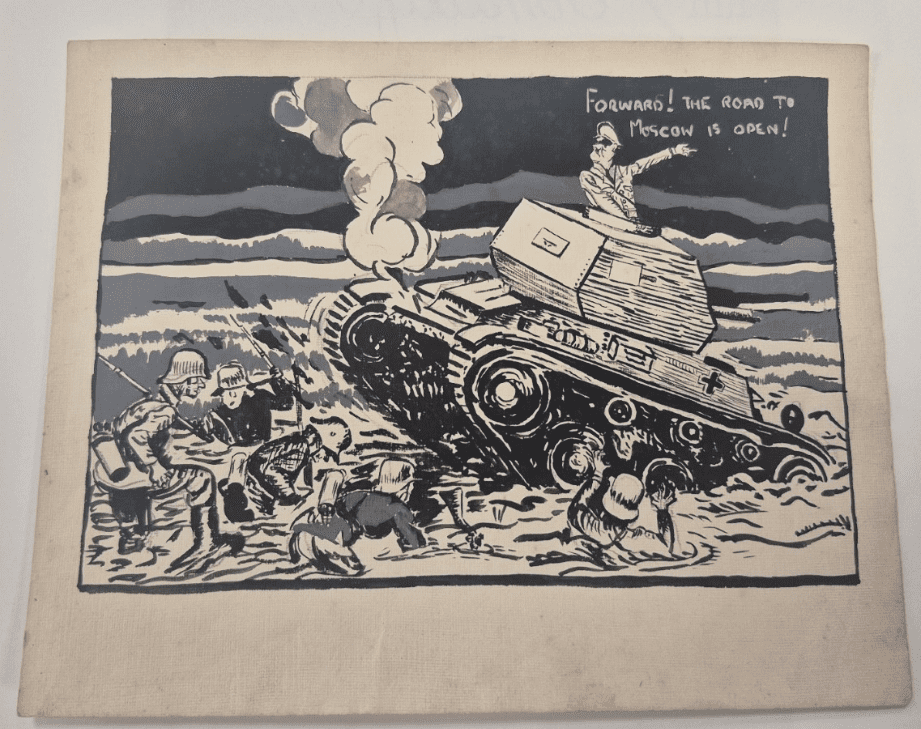
R.W. Hill
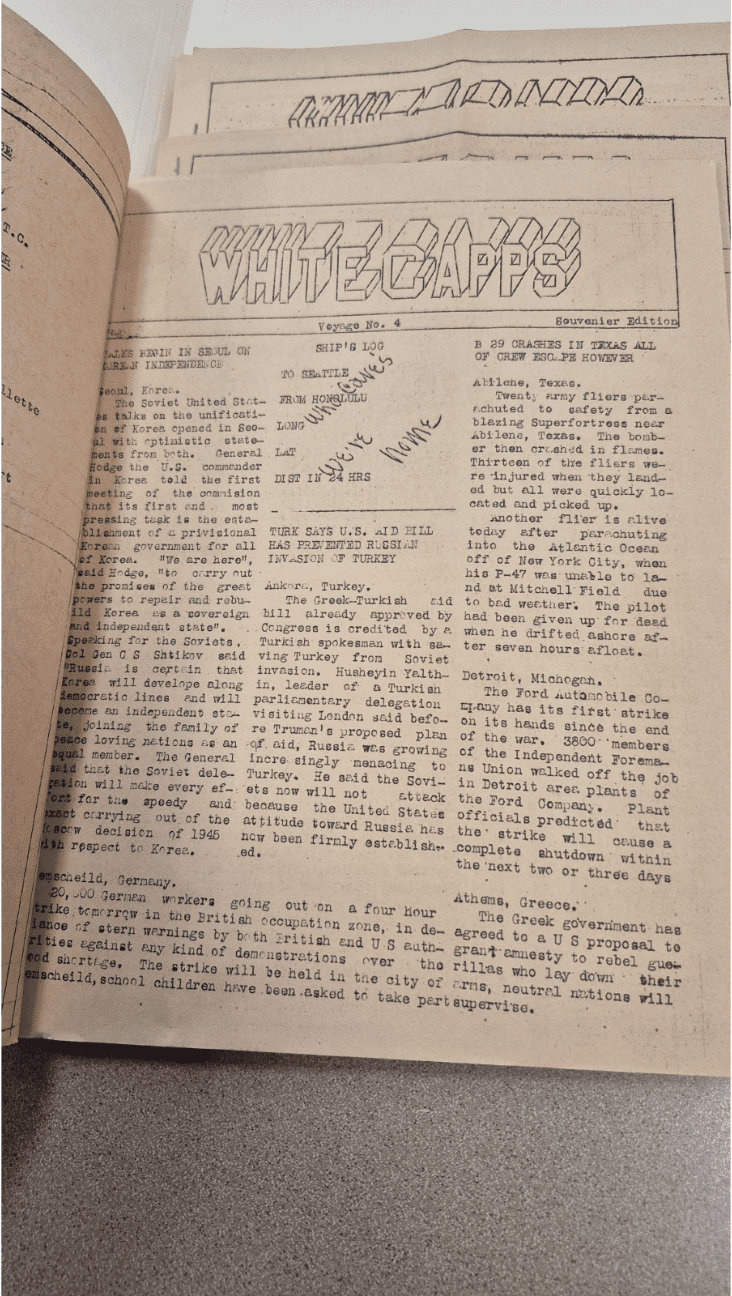
Whitecapps ship newsletter May 22,1947

Midori Yamamura Interview of Larry Kern dated Feb 1, 1998
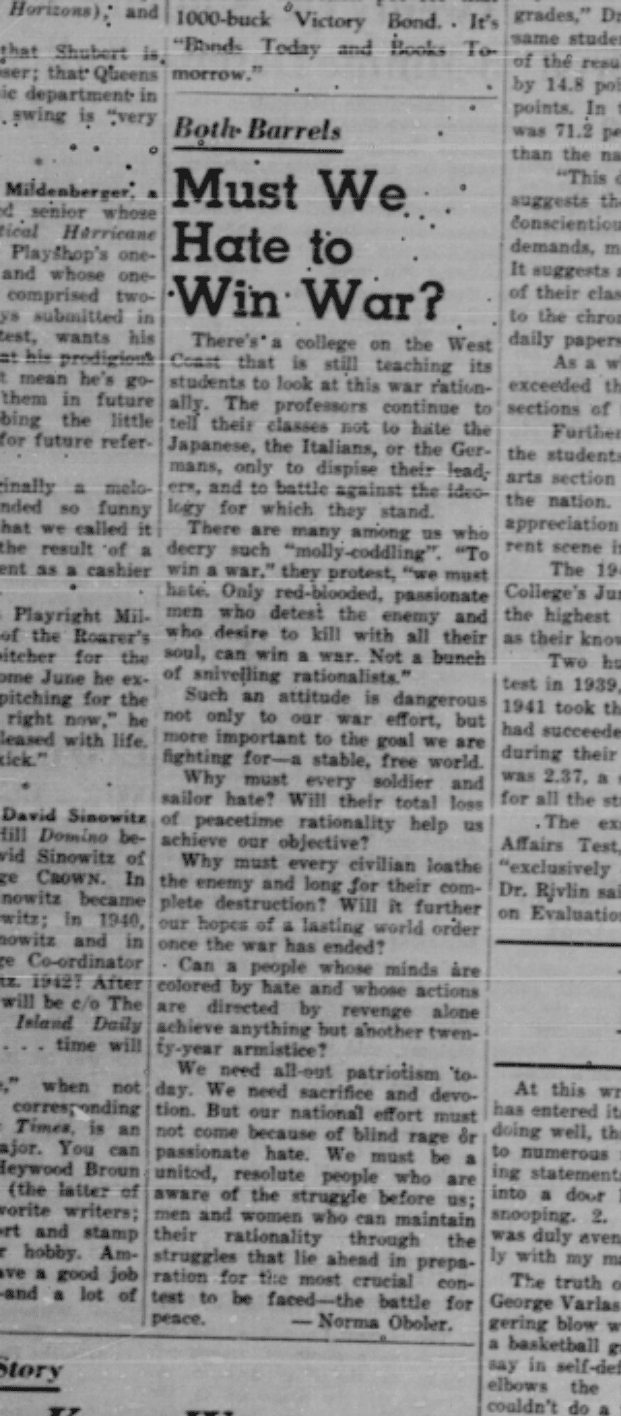
Crown March 13,1942
