

The Marine Geology and Geophysics group explores the world’s oceans to find answers about global sea level changes, climate, geohazards such as earthquakes and tsunamis, and urban pollution. There is a pressing need to understand the impact of climate change because melting of the ice sheets has the potential of increasing rates of relative sea level threatening our coastal cities and metropolitan regions.
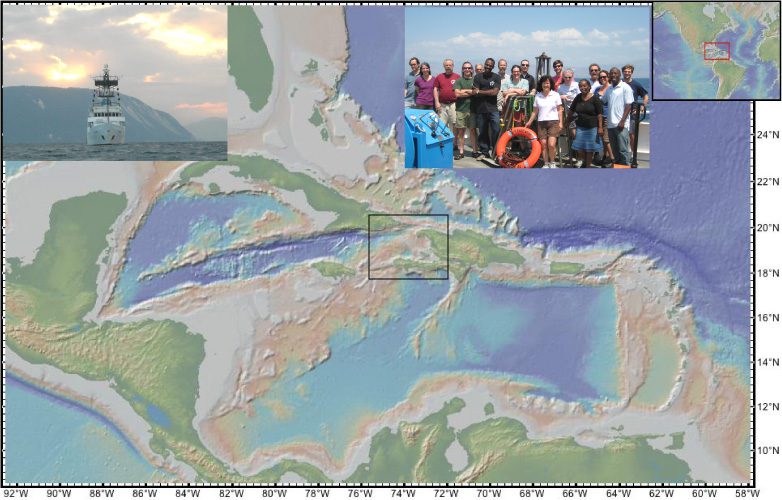
Natural catastrophes such as the 2010 Haiti earthquake and 2011 Japan earthquake and tsunami are being investigated as part of the National Science Foundation RAPID response programs. These programs provide opportunities for international collaborations contributing to the understanding of geohazards globally. Other programs in Bangladesh study the world’s largest fluvial system of the Ganges-Brahmaputra-Meghna Delta, the tectonics associated to the collision between India and Eurasia, the interactions between sedimentation and tectonics, and the hazards from earthquakes, river avulsion and flooding facing the 150+ million inhabitants of Bangladesh.
The impacts of urban pollution on the local sediment and waters are being studied in the Hudson River estuary, Long Island Sound and the New York Bight.
Many opportunities exist for students to join these seagoing and land field programs both that use the latest technologies for data collection and processing.