

NOW OPEN

Spring 2027 Registration

Look through the list of courses.
Make an appointment with your academic advisor.
Request courses that require department permission.
Self-enroll in remaining courses on CUNYfirst.




Apply Now to Undergraduate Admissions!
Apply Now to Graduate Admissions!
Contact Us
Department Office
Office Hours:
Monday – Thursday
9:30 am – 4:30 pm
Department Contact
Email: sees@qc.cuny.edu
Phone: (718) 997-3300
Questions? Concerns? Contact us!
Administrative Staff
Chair of Department
College Laboratory Technicians
Mustafa Kamal
Ilias Georgalis
College Office Assistant
Maria Silvestri
Anne Marie Devlin
NEW YORK STATE GEOLOGY LICENSE
Are you interested in obtaining a New York State Professional Geologist license to further your Earth science career? If yes, then the School of Earth and Environmental Sciences (SEES) at Queens College is the place for you!



Meet Your Academic Advisors!

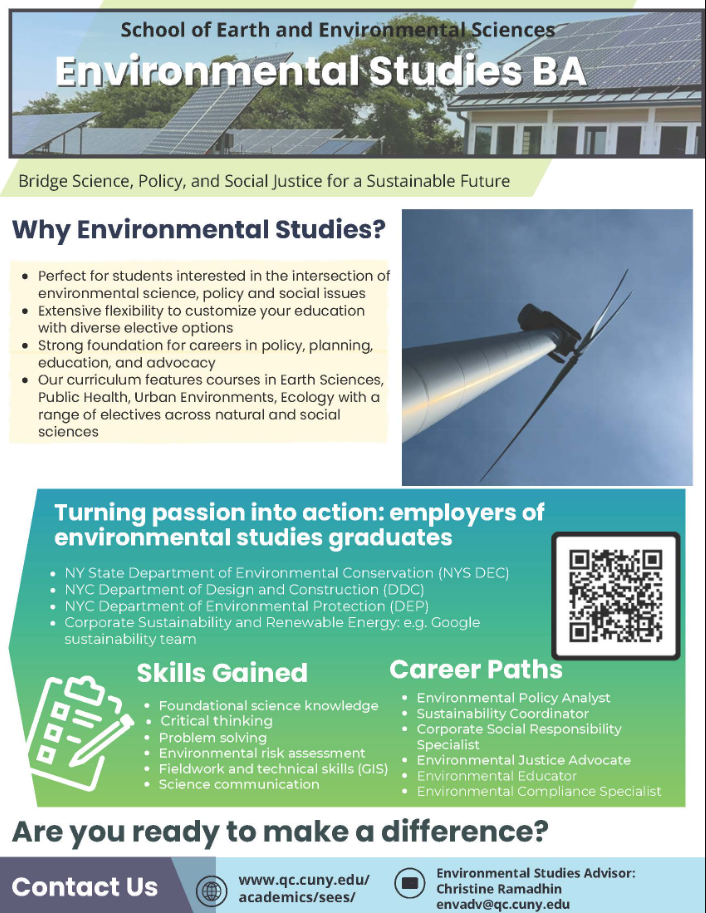
Environmental Science & Studies
Christine Ramadhin

Graduate Studies
Jacquelyn Bracco

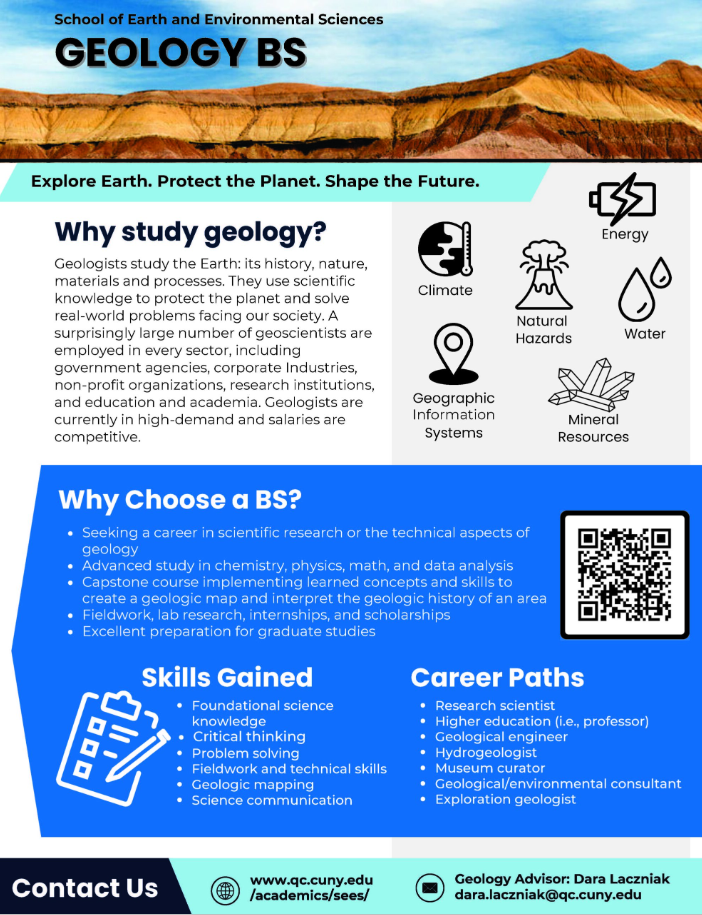
Geology
Dara Laczniak
Now Open
Spring 2027 Registration
Look through the list of courses.
Make an appointment with your academic advisor.
Request courses that require department permission.
Self-enroll in remaining courses on CUNYfirst.
News & Events
FACULTY SPOTLIGHT
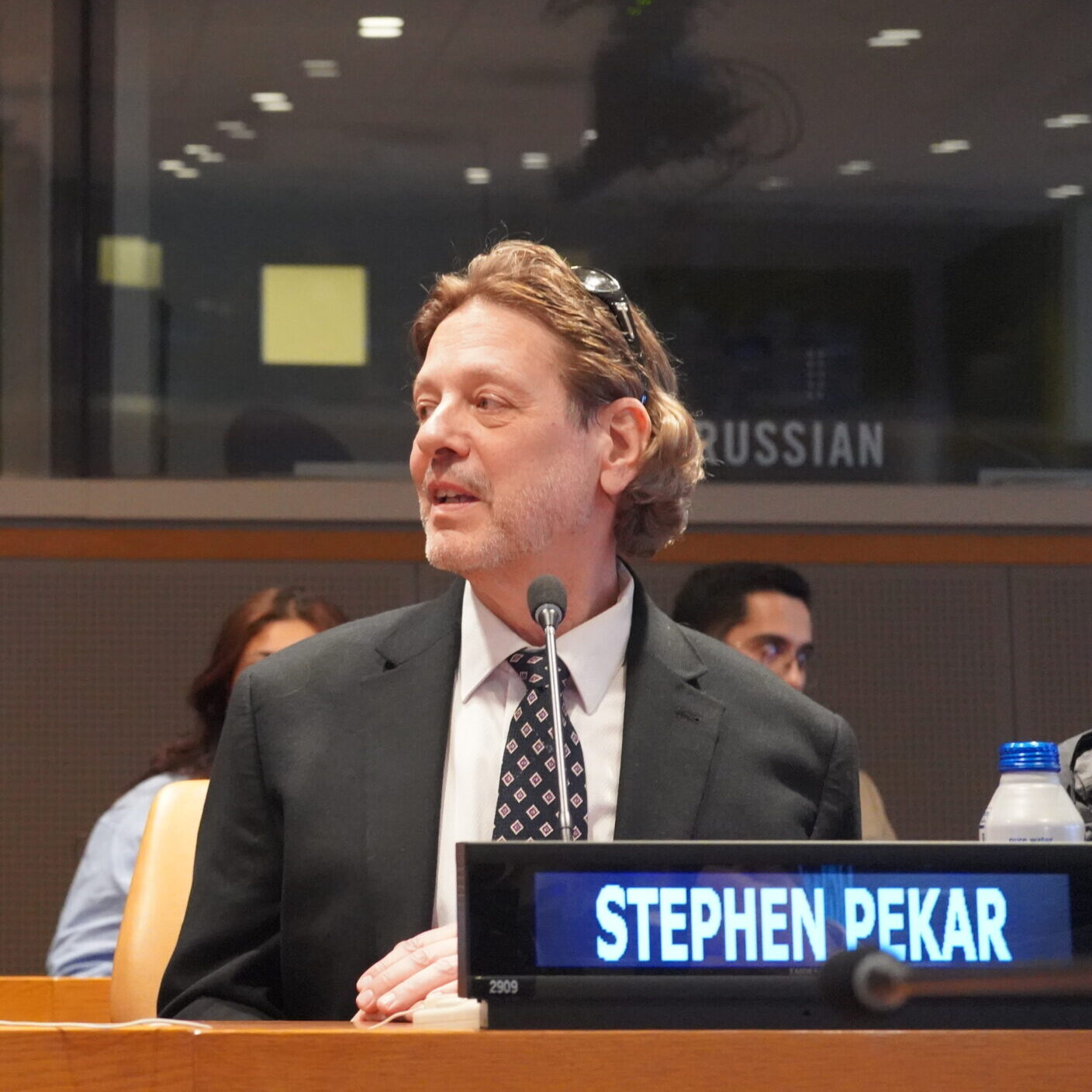
Stephen Pekar
Professor Paleoceanography, paleoclimatology and Antarctic glacial history
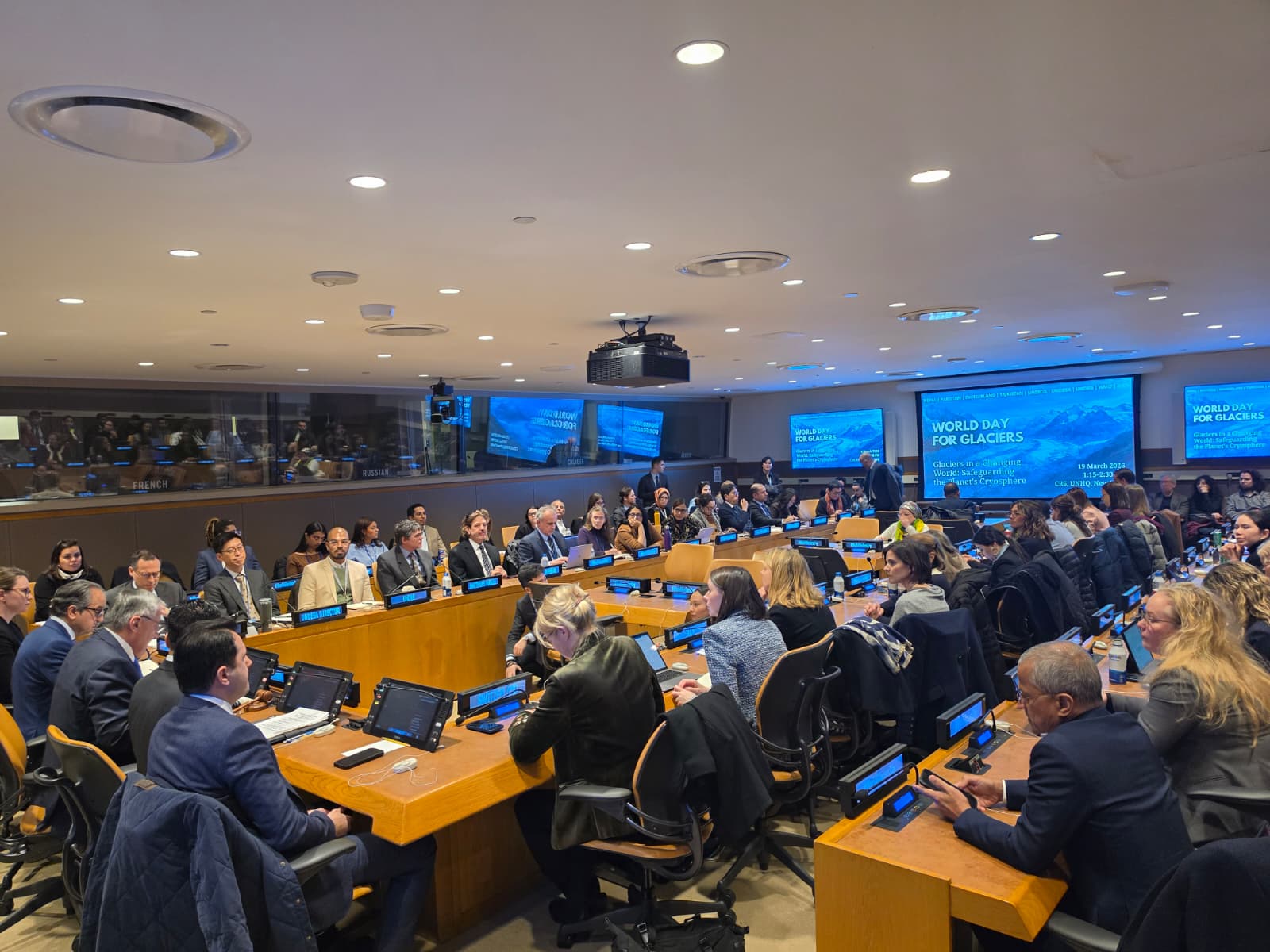
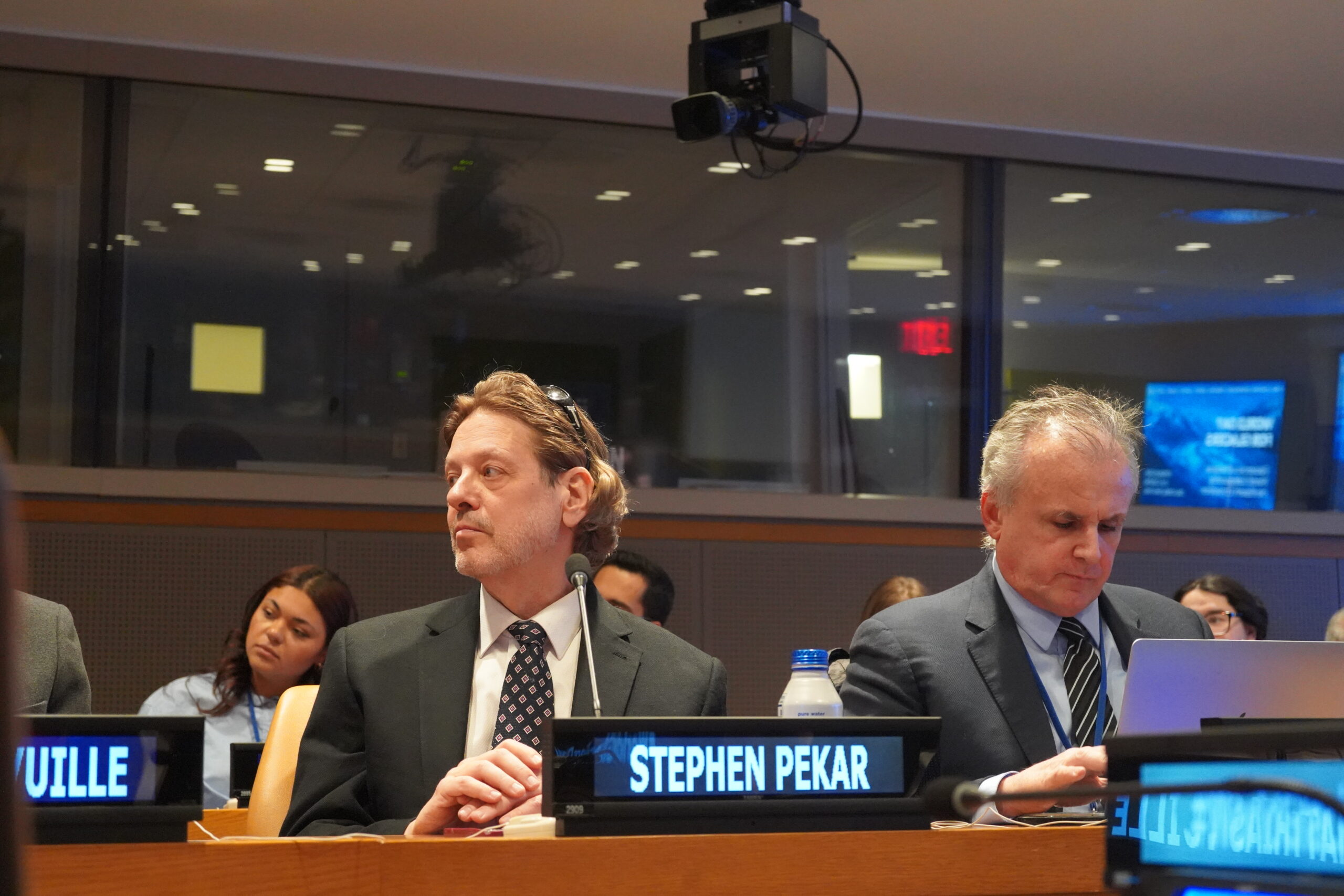
SEES Professor Addresses UN Delegates on World Day for Glaciers.
Professor Stephen Pekar, from the School of Earth and Environmental Sciences at Queens College, CUNY, was one of three scientists invited to speak at the United Nations on March 19, 2026, for the World Day for Glaciers, He addressed a packed room of policymakers and delegates, including the Minister of Foreign Affairs of Tajikistan.
In his talk, Professor Pekar explained how studying periods in Earth’s history when CO₂ levels were even higher than today can help us better understand what’s coming for our climate and sea levels. His presentation was part of the launch of the Decade of Action for Cryospheric Sciences (2025–2034), which aims to turn scientific findings into real-world policies to protect the planet’s ice and snow.
Afterward, several delegates told him they appreciated how clearly he broke down such a complex topic and made the science feel relevant and accessible.


 World Day for Glaciers Link
March 2026
FACULTY SPOTLIGHT

Marc-Antoine Longpre
Associate Professor, Volcanology and Igneous Petrology
Receives 2025 President’s Award for Excellence in Research
SEES is pleased to announce that Associate Professor Marc-Antoine Longpré has been selected as the 2025 recipient of the President’s Award for Excellence in Research and Creativity in the School of Mathematics and Natural Sciences at Queens College.
He will be honored at the State of the College Address and Faculty & Staff Excellence Awards ceremony on Tuesday, April 14th, 2026 in LeFrak Concert Hall.
This award recognizes Dr. Longpré’s outstanding scholarship in 2025, including five high profile scholarly publications from the Longpré research group in 2025 (Nature Communications, Proceedings of the National Academy of Sciences, Bulletin of Volcanology, and two articles in Nature Geoscience). At the center of our nomination was Longpré et al.’s 2025 Nature Geoscience original research article entitled “Shifting melt composition linked to volcanic tremor at Cumbre Vieja volcano”, with co-authors including group members Samantha Tramontano (now an Assistant Professor at York College) and Doctoral Student Franco Cortese. Well done! Due to the high impact findings from this study the Nature Geoscience editors selected the article to have an accompanying “Research Briefing” article published, entitled “Magma composition drives tremors during a volcanic eruption” (Longpré and Tramontano, 2025), which helps to explain the importance of this research to a broader, non-specialist audience. It is worth noting that the 2025 publications had multiple Longpré lab co-authors spanning undergraduate, graduate and postdoctoral researchers.
SEES would like to congratulate Marc-Antoine, and his entire research group! Congratulations on this well-deserved recognition!

March 2026
In Memoriam: Emeritus Professor, Dr. David Speidel
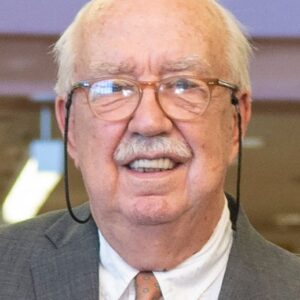
Dr. David Speidel
SEES Emeritus Professor
The School of Earth and Environmental Sciences (SEES) is very sad to announce the recent passing of SEES Emeritus Professor, Dr. David Speidel. He received his bachelor’s degree in geology from Franklin and Marshall College in 1960 and a PhD in geochemistry from Pennsylvania State University in 1964, before joining the faculty at Queens College in 1966 as one of the first members of the Geology Department.
He was a prolific researcher with wide ranging interests. While his primary field of study was phase equilibria in magnesium oxide-iron oxide systems and ferromagnesian mineral stability in igneous rocks, he also had research interests in environmental geochemistry, probability analysis of impact craters and near-Earth asteroids, and probability analysis of earthquake magnitude frequencies. He was a fellow of the Geological Society of America and an active member of professional organizations including the Mineralogical Society of America, the American Geophysical Union, and the American Association for the Advancement of Science.
In addition to his many research contributions, he performed extensive service for his broader professional organizations, our department, and the college. He was a visiting scholar from 1977 – 1978 with the congressional research services, which led to publication of a book entitled “The Natural Geochemistry of our Environment”. He also was a section head in the Earth Science Division at NSF from 1988 to 1989. He served Queens College in many important roles including: chair of the Geology department (from 1980-1988, now the School of Earth and Environmental Sciences); the first Dean of the Division of Mathematics and National Sciences; the first Dean of Graduate Studies and Research; Chairperson of the Academic Senate (1992-1996); Acting Provost, Provost and Senior Vice President for academic programs (1998-2000).
He retired in 2003 after 37 years of service to the College, remaining active at as an Emeritus Professor in SEES for another 23 years. In Retirement he served as Chair of the QC Retirees Association for several years. He remained a familiar presence in SEES, regularly attending our department colloquium, meeting with younger faculty, providing valued guidance and advice, and bringing us news articles and papers related to our research interests. He was a cherished member of our SEES family and he will be dearly missed.
 Link
Link Link
Link
March 2026
Career Panel Events

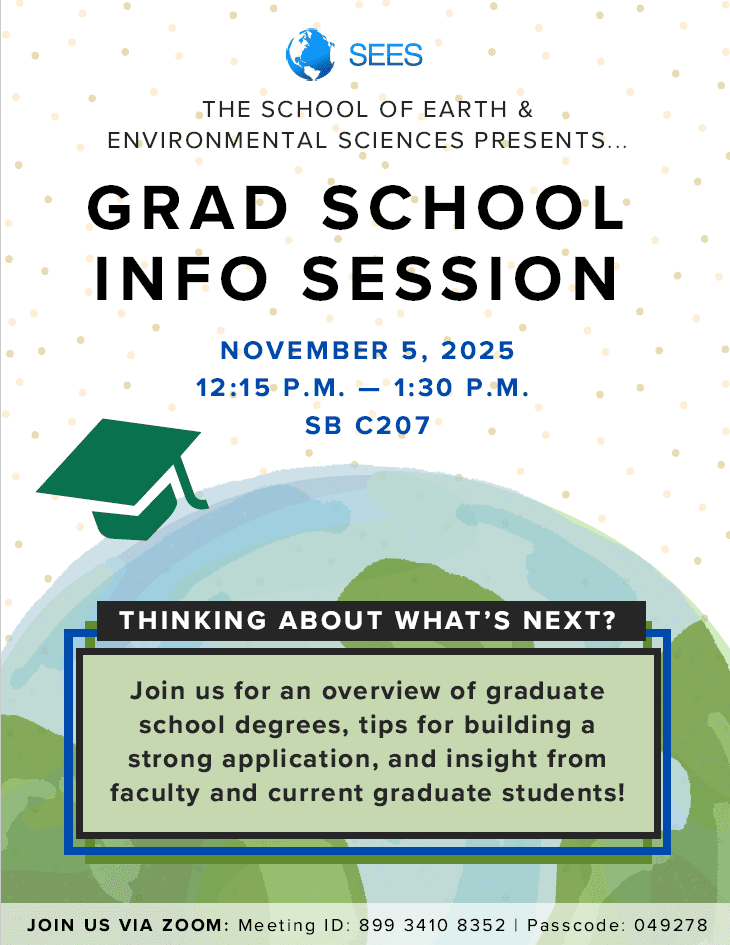


Why SEES



Colloquium
Wednesday, October 21st, 2026
12:15 pm to 1:30 pm
Science Building C-207
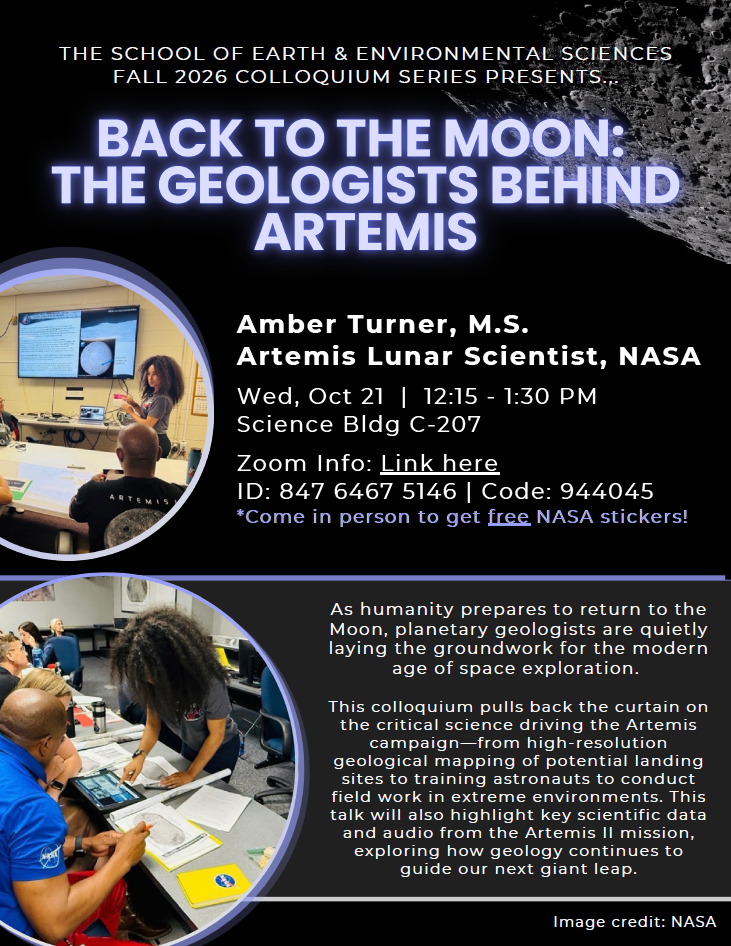
ZOOM LINK
Meeting ID: 847 6467 5146
Passcode: 944045
Amber Turner, M.S. Artemis Lunar Scientist, NASA
BACK TO THE MOON:THE GEOLOGISTS BEHIND ARTEMIS
As humanity prepares to return to the Moon, planetary geologists are quietly laying the groundwork for the modern age of space exploration.
This colloquium pulls back the curtain on the critical science driving the Artemis campaign—from high-resolution geological mapping of potential landing sites to training astronauts to conduct field work in extreme environments. This talk will also highlight key scientific data and audio from the Artemis II mission, exploring how geology continues to guide our next giant leap.
Coming up : Wednesday, October 28th, 2026
Dr. Salvatore Garofalo, Assistant Professor, Dr. Stephen Farenga, Professor and Program Director
The Science and Technology Education Program Queens College
Contact Us
Department Office
Office Hours:
Monday – Thursday
9:30 am – 4:30 pm
Department Contact
Email: sees@qc.cuny.edu
Phone: (718) 997-3300
Questions? Concerns? Contact us!
Administrative Staff
Chair of Department
College Laboratory Technicians
Mustafa Kamal
Ilias Georgalis
College Office Assistant
Maria Silvestri
Anne Marie Devlin